Compare OCBC Miles Credit Cards
2 OCBC Bank miles cards ranked side-by-side at your monthly spend. Last updated 3 Oct 2026
lockThese numbers stay in your browser — nothing is saved.
Ranked by projected annual miles at your entered spend. Ties broken alphabetically by issuer. Cards marked “Affiliate link” or “Affiliate” earn SGfi a referral commission if you apply through these links — this does not influence the ranking.
In this scenario, pairing UOB PRVI Miles Card as catch-all base card, Citi Rewards Card for Shopping & online and UOB Lady's Card for Dining.


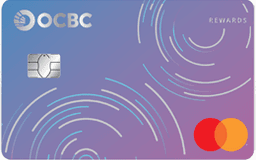
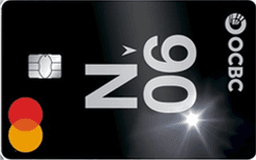
Ranked by projected annual miles at your entered spend. Ties broken alphabetically by issuer. Cards marked “Affiliate link” or “Affiliate” earn SGfi a referral commission if you apply through these links — this does not influence the ranking.
Figures are estimates based on the spending you entered, assumed steady across the year, using standard Merchant Category Code (MCC) classifications and each issuer’s published rates. Monthly caps, annual fees and minimum-spend requirements are shown on every row and factored into the projections. Not modelled: promotional sign-up bonuses, merchant-specific exclusions, fee waivers beyond the first-year window shown, and future rate changes by issuers. First-year figures assume a new cardholder eligible for introductory rates; ongoing figures reflect post-introductory rates. Standard merchant coverage estimates are based on Singapore market share; you can adjust them in the settings above.
Actual earnings depend on your eligibility and each bank’s current terms, which may differ from the figures shown here — always verify with the issuer before applying.
About OCBC Bank's miles cards
OCBC's miles side is the 90°N Card, a travel-skewed earner with broad acceptance and competitive caps. This page filters the full SGfi miles-card comparison to just OCBC's lineup, with the same calculator-based ranking, identical published rates and caps, and the same projected-miles formula applied across cards. Use the bank chips above to widen the comparison to other issuers.
SGfi tracks 2 OCBC miles cards in this comparison: OCBC 90°N Card and OCBC Rewards Card. Across the lineup, all carry an annual fee of S$196.20, base rates run from 0.4 mpd to 1.3 mpd, and top category bonuses reach 7 mpd on eligible spend. Use the input sidebar to rank the cards by projected annual miles at your monthly spend profile.
How miles are calculated
Card rankings on this page are dynamically calculated using each card's miles-per-dollar rate (SGfi's conversion of the reward points the bank publishes into KrisFlyer miles), together with the category spending caps, minimum-income thresholds, and annual fees taken from official banking portals in Singapore. The system projects estimated monthly and yearly mileage returns by parsing your configurable monthly spend across common categories (e.g., dining, travel, local retail) against each card's unique matrix. Spending limits, such as the S$1,000 caps explicitly defined for cards like the Citi Rewards and DBS Woman's World, are factored into the calculation algorithm to provide realistic projections. These projections are for illustrative purposes only and do not constitute financial advice.
Card summary table
Flat reference of every miles card included on this page. Tap a card name to open its full review.
All Singapore card rates & feesarrow_forward| Card | Issuer | Base rate | Top bonus | Annual fee | Min spend |
|---|---|---|---|---|---|
| OCBC 90°N Card | OCBC | 1.3 mpd | 7 mpd | S$196.20 | None |
| OCBC Rewards Card | OCBC | 0.4 mpd | 4 mpd | S$196.20 | None |
Frequently asked questions
Which OCBC miles credit cards does SGfi compare?
SGfi currently compares 2 OCBC Bank miles cards: OCBC 90°N Card and OCBC Rewards Card. Each is ranked by projected annual miles at the monthly spend you enter on the calculator above.
Which OCBC miles card has the lowest annual fee?
The OCBC 90°N Card has the lowest annual fee at S$196.20 per year among the OCBC miles cards SGfi tracks. Annual fees may be waived for the first year — check the row detail for each card.
Which OCBC miles card has the highest base rate?
The OCBC 90°N Card has the highest base rate at 1.3 mpd. Some other OCBC cards may earn more on category bonuses — see the comparison summary table on this page for the full rate breakdown.
Does OCBC charge a fee to transfer 90°N Miles to KrisFlyer?
OCBC 90°N Miles convert to KrisFlyer at a 1:1 ratio with no percentage conversion fee, and the miles never expire. However, OCBC applies a S$25 administrative fee per transfer transaction, the minimum transfer is 1,000 miles, and crediting can take up to 21 working days.
How do I compare miles earning rates across different Singapore banks?
Miles cards quote their earn rate as miles per dollar (mpd), so mpd is the common yardstick when you line up cards from different banks. Headline mpd alone is not the whole story, though, because each card caps, tiers, and excludes categories differently. The most reliable way to compare is to enter your monthly spending into the calculator above — it projects the annual miles each card would earn on your actual spend mix and ranks them for that profile. The card summary table lists every card's mpd rates, caps, and annual fees side by side, and the per-bank pages (reached from the bank filter) narrow the comparison to a single issuer. Projected miles depend on the rates verified at the date noted, and terms and conditions apply.
Which Singapore miles cards offer the highest mpd rates in 2026?
The suitable miles card depends on spending patterns. For uncapped everyday spending, the UOB PRVI Miles (1.4 mpd local, 2.4 mpd overseas) is a highly competitive all-rounder. For online shopping, the DBS Woman's World and Citi Rewards earn an effective 4 mpd once their reward points convert to KrisFlyer miles (capped at S$1,000/month). For Singapore Airlines loyalists, the UOB KrisFlyer Card earns 2.4 mpd uncapped on dining, online, and transport. For those seeking a card with no annual fee, the HSBC Revolution earns 4 mpd with no annual fee.
What does mpd mean?
Mpd stands for miles per dollar. It measures how many airline miles a credit card earns for every dollar spent. A card earning 2 mpd generates 2 airline miles for each S$1 charged. Higher mpd rates mean faster miles accumulation towards free flights.
How many miles do I need for a flight from Singapore to Tokyo?
A one-way KrisFlyer Saver Award flight from Singapore to Tokyo in Economy class requires approximately 25,500 miles. Business class requires approximately 54,500 miles one-way. Availability varies by date, and peak pricing tiers may require more miles. Round-trip flights require double the one-way mileage. Use our Miles Calculator to estimate how long your spending profile will take to reach those balances.
How do I transfer bank points to KrisFlyer?
Most bank reward points can be transferred to KrisFlyer through the bank's online rewards portal or mobile app. Citi Miles, DBS Points, UOB UNIS$, and OCBC TravelS$ each have their own transfer process. Transfers typically take 1-5 business days. Direct KrisFlyer co-brand cards (UOB KrisFlyer, AMEX KrisFlyer) credit miles automatically without a transfer step.
What are the bank points-to-KrisFlyer-miles conversion rates?
Conversion rates vary by bank reward program. DBS Points and UOB UNI$ are among the most generous at 2 miles per point (5,000 points = 10,000 miles). Citi Miles (PremierMiles, Prestige), OCBC 90°N Miles, and OCBC VOYAGE Miles convert 1-to-1. Amex Membership Rewards convert at roughly 0.56 miles per point (450 points = 250 miles); Amex Platinum Points at 0.625 miles per point (400 points = 250 miles). Citi Rewards Points, SC 360° Rewards, Maybank TREATS, and OCBC$ run at 0.4 miles per point (25,000 points = 10,000 miles). HSBC Reward Points convert at roughly 0.33 miles per point (30,000 points = 10,000 miles). Most banks charge a S$27.25 administrative fee per transfer block and credit within 1-5 business days. Use the Miles Calculator to convert your current point balances into KrisFlyer miles and see which destinations from Singapore are within reach.
Do KrisFlyer miles expire?
KrisFlyer miles expire 36 months after they are earned. However, bank reward points may have different expiry policies. Citi PremierMiles and DBS Altitude points do not expire. However, UOB UNI$ expire after 2 years, Citi ThankYou Points (from Citi Rewards) expire after 5 years, and DBS points from the Woman's World card expire after just 1 year. UOB UNIS$ expire after 2 years. OCBC TravelS$ do not expire. Check each bank's terms before transferring to KrisFlyer.
Can I combine miles from different credit cards into one KrisFlyer account?
Yes. Miles from different bank cards can be combined by transferring reward points from multiple cards to the same KrisFlyer membership number. Cards from different banks can all feed into one account. Direct co-brand cards must be linked to the same KrisFlyer account during application.
Which Singapore credit card earns the most miles per dollar?
Cards whose points convert to an effective 4 mpd on category bonuses (Citi Rewards, DBS Woman's World, HSBC Revolution) earn the highest rate but are capped at S$1,000/month per eligible category. For uncapped earning, the UOB PRVI Miles leads at 1.4 mpd local and 2.4 mpd overseas. The SC Visa Infinite earns 3 mpd overseas and 1.4 mpd locally but requires a minimum S$2,000 monthly spend.
Are miles earned on credit card annual fee payments?
Most Singapore credit cards do not award miles on annual fee charges. The annual fee is typically excluded from miles-earning transactions. Check specific card terms as policies vary by issuer.
Are these rates guaranteed?
No. Banks change miles-per-dollar rates, caps, and eligible categories regularly. The numbers shown are projections based on rates verified at the date noted, not guarantees of future earnings.
Last verified: 3 Oct 2026