UOB One Credit Card vs OCBC 365 Credit Card
A side-by-side comparison of two Singapore cashback cards. Rates, caps and fees come from each issuer’s published terms; the simulator projects each card’s annual cashback at the spend you enter.
chevron_rightTo all Cashback CardslockThese numbers stay in your browser — nothing is saved.
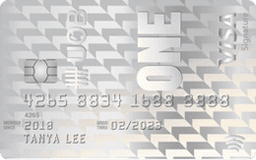
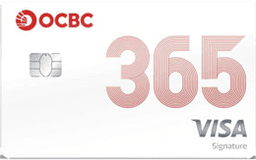
At S$2,100/mo entered, the UOB One Credit Card projects the higher annual cashback figure — a difference of S$777.
Figures update as you change your spending. They are projections from your inputs and each issuer’s published rates — not a promise of returns. Open the detailed breakdown below to see each card’s per-category working, side by side.
Only categories where one of the cards pays a bonus are listed. Each cell is the cashback rate at that spend tier (the monthly-spend threshold) — rates above a card’s base rate are bold in the card’s colour, base rates are muted. Figures are ongoing, after any intro period; earn caps apply (see the conditions below).
UOB One Credit Card — McDonald's · McDonald's transactions.
OCBC 365 Credit Card · Local and overseas dining at merchants classified as Dining; online food delivery at Deliveroo, foodpanda and GrabFood.
UOB One Credit Card · All grocery transactions at Grocery Stores/Supermarket merchants.
OCBC 365 Credit Card · Local and overseas groceries at merchants classified as Grocery, including online groceries (e.g. FairPrice Online, RedMart).
UOB One Credit Card — Shopee Singapore · Shopee Singapore transactions (excluding ShopeePay wallet top-ups).
OCBC 365 Credit Card — Streaming · Streaming services including Netflix, Disney+, Spotify and Apple Music.
UOB One Credit Card — Grab, MRT & Bus · Grab (excluding wallet top-ups) and MRT/Bus SimplyGo transactions.
OCBC 365 Credit Card · Bus and MRT rides via SimplyGo; local and overseas private hire rides (Grab excluding GrabPay, Gojek, TADA); local and overseas taxi rides (e.g. ComfortDelGro).
UOB One Credit Card — Shell · Shell transactions.
OCBC 365 Credit Card · All petrol kiosks locally and overseas classified as Petrol. Fleet card spend excluded. EV charging stations (e.g. SP Digital, Greenlots, CDG ENGIE, City Energy)
Every value is taken from each issuer’s published terms. A blank field shows as “—”. Earn caps are shown in the issuer’s native period — a quarterly cap is not converted to monthly.
See the full details for each card
UOB One Credit Card and OCBC 365 Credit Card, compared
How the UOB One Credit Card and the OCBC 365 Credit Card differ
The UOB One Credit Card earns 6.7% on Grab, MRT & Bus, 6.7% on McDonald's, and 6.7% on Shopee Singapore, plus 0.03% on other eligible spend. The OCBC 365 Credit Card earns 6% on petrol, 5% on dining, and 3% on groceries, plus 0.25% on other eligible spend. On earn caps, the UOB One Credit Card’s cap varies by spend tier and the OCBC 365 Credit Card caps at S$80 / month, each shown in the issuer’s native period.
Where the UOB One Credit Card and the OCBC 365 Credit Card pay different rates
The two cards diverge most on petrol, where the OCBC 365 Credit Card pays 6% from S$800 monthly spend against the UOB One Credit Card’s 1.7% from S$2,000 monthly spend. Category by category, on ongoing rates (introductory offers excluded): Petrol: the OCBC 365 Credit Card pays 6% from S$800 monthly spend; the UOB One Credit Card pays 1.7% from S$2,000 monthly spend. Shopping & online: the UOB One Credit Card pays 6.7% from S$2,000 monthly spend; the OCBC 365 Credit Card pays 3% from S$800 monthly spend. Transport: the UOB One Credit Card pays 6.7% from S$2,000 monthly spend; the OCBC 365 Credit Card pays 3% from S$800 monthly spend. Groceries: the UOB One Credit Card pays 4.7% from S$2,000 monthly spend; the OCBC 365 Credit Card pays 3% from S$800 monthly spend. Dining: the UOB One Credit Card pays 6.7% from S$2,000 monthly spend; the OCBC 365 Credit Card pays 5% from S$800 monthly spend. Outside those categories both cards fall back to their base rate: 0.03% on the UOB One Credit Card and 0.25% on the OCBC 365 Credit Card.
Where the UOB One Credit Card and the OCBC 365 Credit Card are alike
Both carry the same S$196.20 annual fee. Both pay a bonus rate on transport, dining, shopping & online, groceries, and petrol.
What each card requires before the published rates apply
On spend requirements, the UOB One Credit Card steps its rates up across 3 spend tiers at S$600, S$1,000, and S$2,000 of monthly spend, while the OCBC 365 Credit Card steps its rates up across 2 spend tiers at S$800 and S$1,600 of monthly spend. The OCBC 365 Credit Card’s cap steps from S$80/mo to S$160/mo as monthly spend rises.
How the projection is calculated
The earnings section above projects each card’s annual cashback from the category amounts you enter, using each issuer’s published rates and caps. Output depends only on the card data and your inputs — affiliate status never changes the figures or the order they appear in. You can simulate any spending mix to compare the two cards at your own profile.
Other head-to-heads with these cards
Each runs the same earning calculation on your own spending, so you can weigh UOB One Credit Card or OCBC 365 Credit Card against a different alternative.
Frequently asked questions
What is the difference between the UOB One Credit Card and the OCBC 365 Credit Card?
The two cards diverge most on petrol, where the OCBC 365 Credit Card pays 6% from S$800 monthly spend against the UOB One Credit Card’s 1.7% from S$2,000 monthly spend. The UOB One Credit Card earns 6.7% on Grab, MRT & Bus, 6.7% on McDonald's, and 6.7% on Shopee Singapore, plus 0.03% on other eligible spend. The OCBC 365 Credit Card earns 6% on petrol, 5% on dining, and 3% on groceries, plus 0.25% on other eligible spend.
Do the UOB One Credit Card and the OCBC 365 Credit Card charge an annual fee?
The UOB One Credit Card: S$196.20 (First year waived). The OCBC 365 Credit Card: S$196.20 (Waived above S$10,000 annual spend).
Which card projects more cashback for my spending?
It depends on your spending mix. The gap is widest on petrol (6% from S$800 monthly spend on the OCBC 365 Credit Card against 1.7% from S$2,000 monthly spend on the UOB One Credit Card), so how much of your spend lands there moves the projection most. The simulator above projects each card’s annual cashback from the amounts you enter, and states which card projects higher at that spend. Change the inputs to compare at your own profile.
What are the earning caps on the UOB One Credit Card and the OCBC 365 Credit Card?
On total cashback, the UOB One Credit Card’s cap varies by spend tier and the OCBC 365 Credit Card caps at S$80 / month. Caps are shown in each issuer’s native period — a quarterly cap is not converted to a monthly figure. Rates are tier-gated: the UOB One Credit Card steps its rates up across 3 spend tiers at S$600, S$1,000, and S$2,000 of monthly spend, while the OCBC 365 Credit Card steps its rates up across 2 spend tiers at S$800 and S$1,600 of monthly spend.
What is the minimum income for the UOB One Credit Card and the OCBC 365 Credit Card?
The UOB One Credit Card: S$30,000 (citizen/PR) · S$40,000 (foreigner). The OCBC 365 Credit Card: S$30,000 (citizen/PR) · S$45,000 (foreigner). Eligibility also depends on each issuer’s own assessment; confirm current criteria with the issuer before applying.
Is this comparison affected by affiliate links?
No. The projected figures and the order of the two cards depend only on each card’s published data and the spending you enter; affiliate status never changes them. Card details are shown as of each issuer’s verification date — confirm current terms with the issuer before applying.
Figures are estimates based on the spending you entered, assumed steady across the year, using standard Merchant Category Code (MCC) classifications and each issuer’s published rates. Monthly caps, annual fees and minimum-spend requirements are shown on every row and factored into the projections. Not modelled: promotional sign-up bonuses, merchant-specific exclusions, fee waivers beyond the first-year window shown, and future rate changes by issuers. First-year figures assume a new cardholder eligible for introductory rates; ongoing figures reflect post-introductory rates. Standard merchant coverage estimates are based on Singapore market share; you can adjust them in the settings above.
Actual earnings depend on your eligibility and each bank’s current terms, which may differ from the figures shown here — always verify with the issuer before applying.
Spending abroad?
A card’s foreign-currency fee changes what an overseas purchase costs. The currency converter shows each card’s SGD cost after its FX fee and the value of its rewards.
Open the currency converter